

How soggylife Started: Blisters, a Boat, and Bright Socks

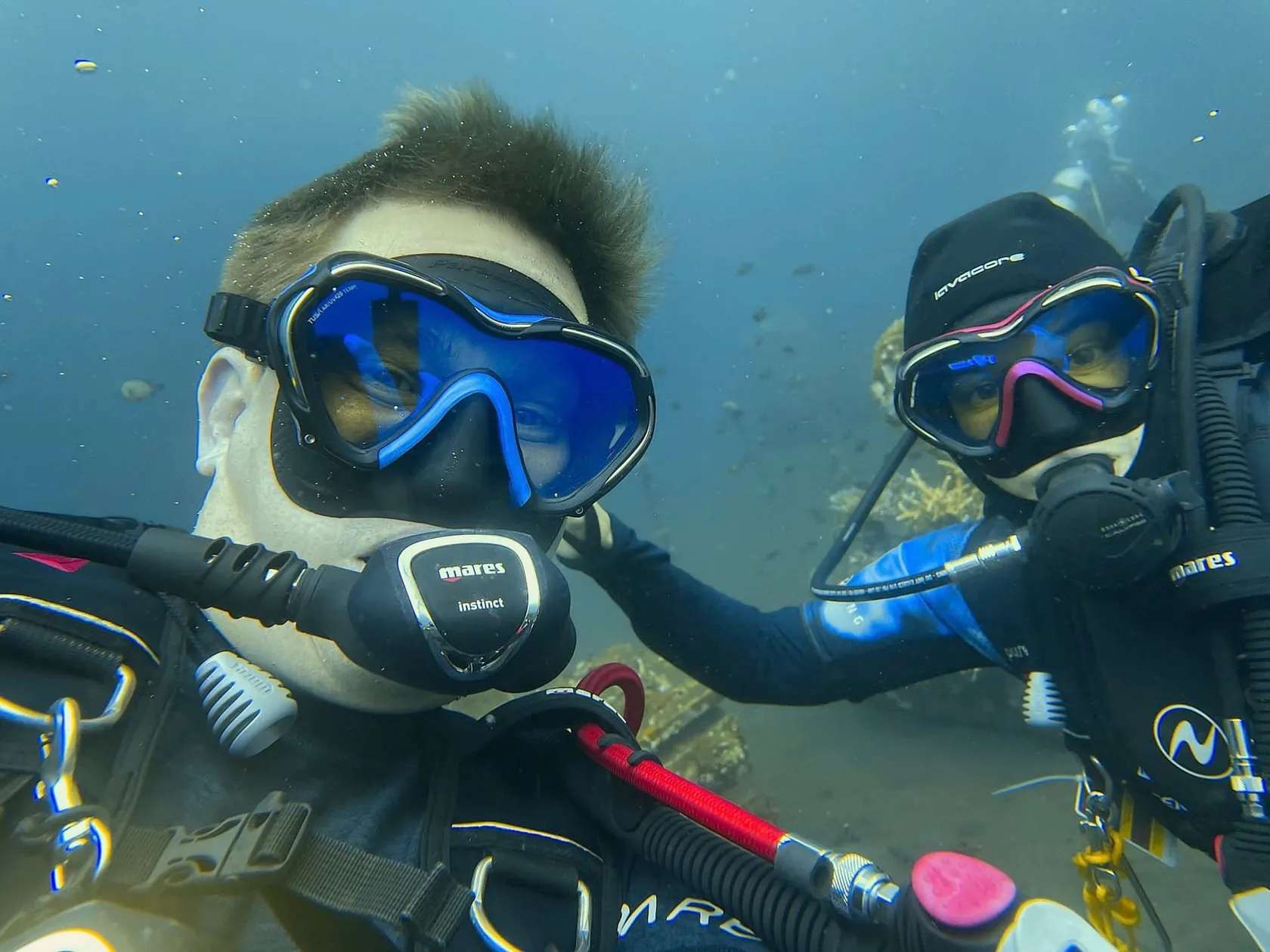
Every brand has an origin story. Ours involves raw feet, a wetsuit that would not budge, and two divers who made getting dressed look easy. Here's the whole thing.
Day four on a liveaboard. Four dives a day, which means four wetsuit changes a day, which means by now the neoprene knows exactly where your skin is raw and goes straight for it. Caroline had a blister on each heel. Jonas was doing the thing everyone does, sitting on a wet bench, one leg half in, yanking, sweating, quietly losing an argument with a piece of rubber.
Then two American divers walked past, stepped into their suits like they were pyjamas, and were geared up before we had finished the left leg.
They were wearing socks. Bright ones, covered in some kind of pattern, thin lycra that went halfway up the calf.
We stared. What in the name of the great manatee is that.
Nobody in Europe had them
We asked. They explained. The suit glides over the sock instead of grabbing your skin, and your heels stop getting sanded down by the neoprene. Obvious once you see it. We spent the rest of that trip mildly obsessed and the flight home googling.
Nothing. A few US shops, nothing here, and certainly nothing that looked like anything. Every European dive shop we asked either had never heard of them or offered us a 3 mm neoprene bootie, which is a completely different object solving a completely different problem.
So we did the thing you do when you want something that does not exist. We decided to make it.
The name came before the plan
We called it Soggywear at first, which we thought was quite clever for about six months. It became soggylife when we realised the thing we actually wanted to talk about was not the product. It was the state of being. Life around the ocean is wet. Your hair is wet, your bag is wet, the towel you optimistically hung up this morning is wetter than when you left it. Being soggy is not the price of the trip. It is the trip.
That is the whole brand, really. Two people who are happiest slightly damp, making the gear they wanted to buy and could not find.
Then came the parts we had no idea how to do
Here is the unglamorous truth about starting an apparel brand when neither of you comes from apparel: almost every step was something we had never done before.
We could not draw, so we went looking for someone who could, and found an illustrator whose nature patterns had exactly the kind of detail we wanted. She turned a flock of Galápagos birds into a reef full of hammerheads for us. That story is here, and it is our favourite one.
No factory would touch an order our size, so Jonas bought a cutting mat, learned to sew off the internet, and made the first pairs at the kitchen table. Badly, at first. That story is here, including the seam he redid more times than he will admit.
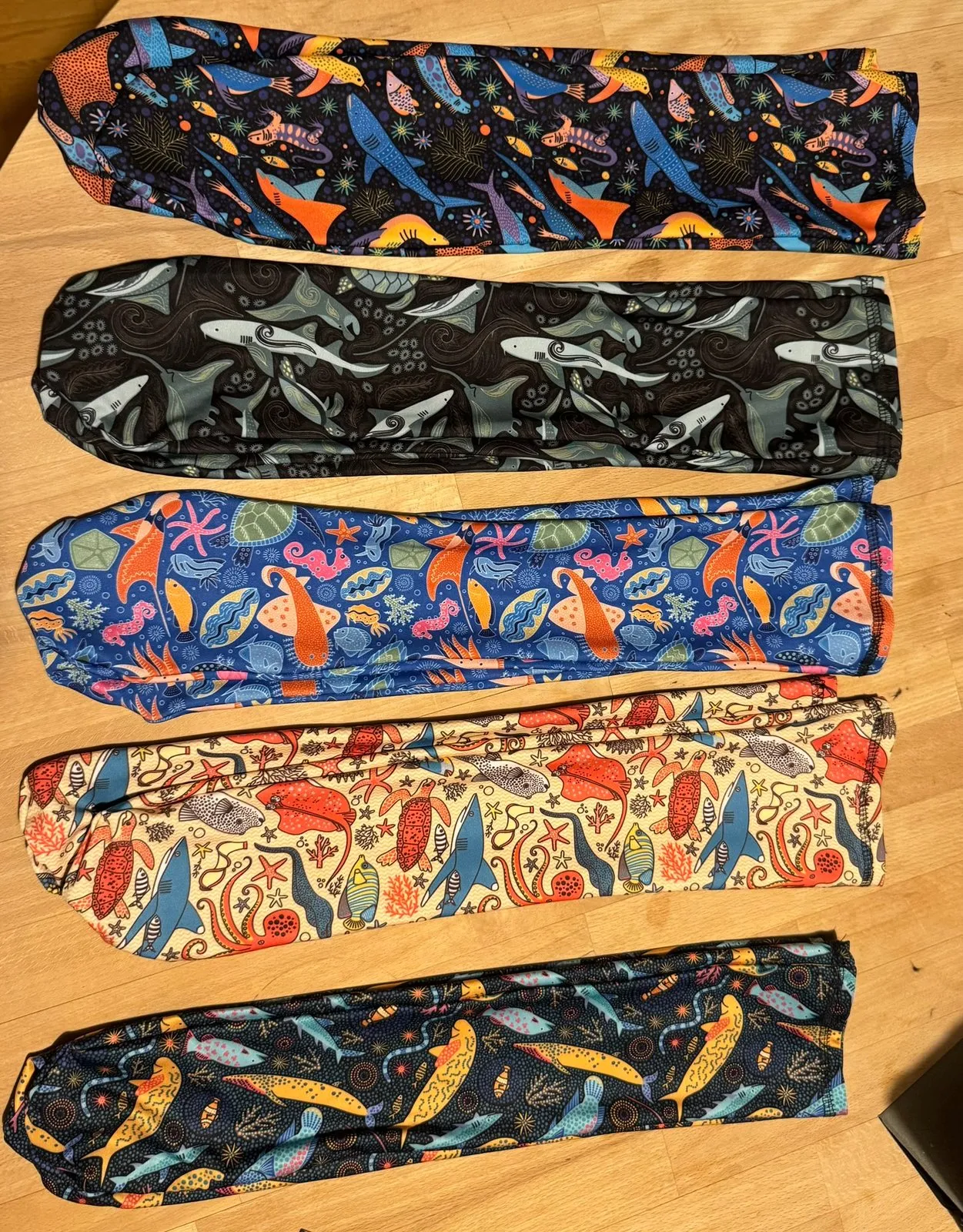
The first generation. Made at home, tested in the Pacific.
Then we took the hand-sewn ones to the Galápagos for three weeks, wore them on every dive, and handed pairs to friends on the boat to see whether they held up on feet that were not ours. They did, which was a genuine relief, because the alternative was going home and starting over.
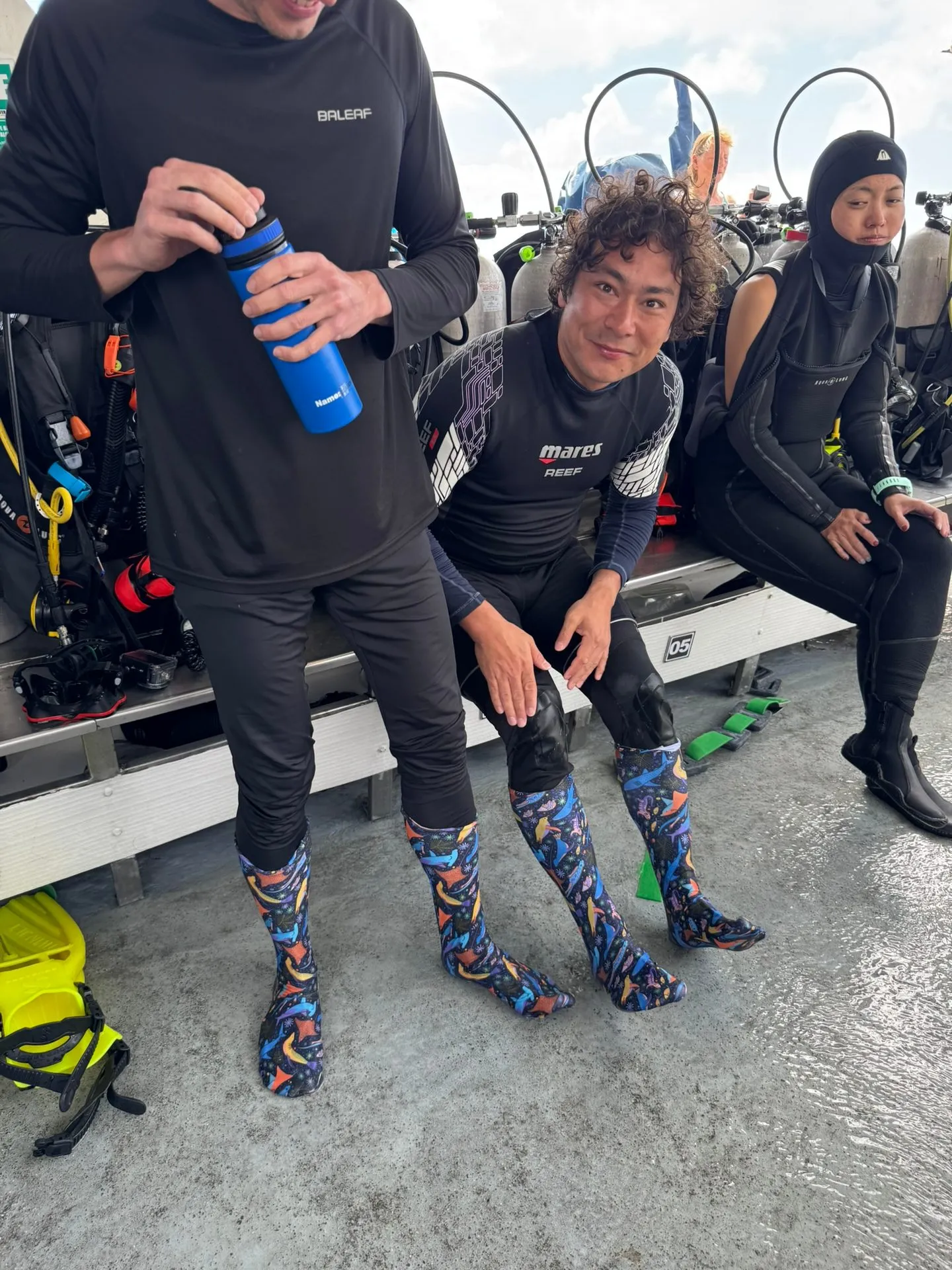
Field testing, otherwise known as making your friends wear your prototypes.
And the part nobody warns you about: finding someone to actually produce them. Months of emails, sample requests, quotes that came back with minimum order quantities designed for companies with warehouses. We also wanted to know who was sewing them and under what conditions, which narrows the list fast and makes the conversations longer. We wrote about that hunt too.
If you’re building something small, ask about certificates early. Not at the end, when you have already fallen in love with a sample. It saves everyone a lot of time.
Where we are now
Two of us. A print library that keeps growing. Prototypes that have been in the water on three continents, and a shop that is very nearly open.
We are not trying to become a big apparel company. We want to make dive socks that work, rashguards that go with them, and put patterns on both that make you smile at 6 a.m. on a cold dive deck when the coffee has not landed yet. Small runs, because there are two of us and no warehouse. Real prints, because the black-neoprene look was never really us.
If you have ever fought a wetsuit and lost, you already understand the whole business plan.
Come get soggy with us. The shop opens soon, and we would love you to be there on day one. Stay soggy.