

The Hard Part Isn’t the Socks: Our Hunt for the Right Factory

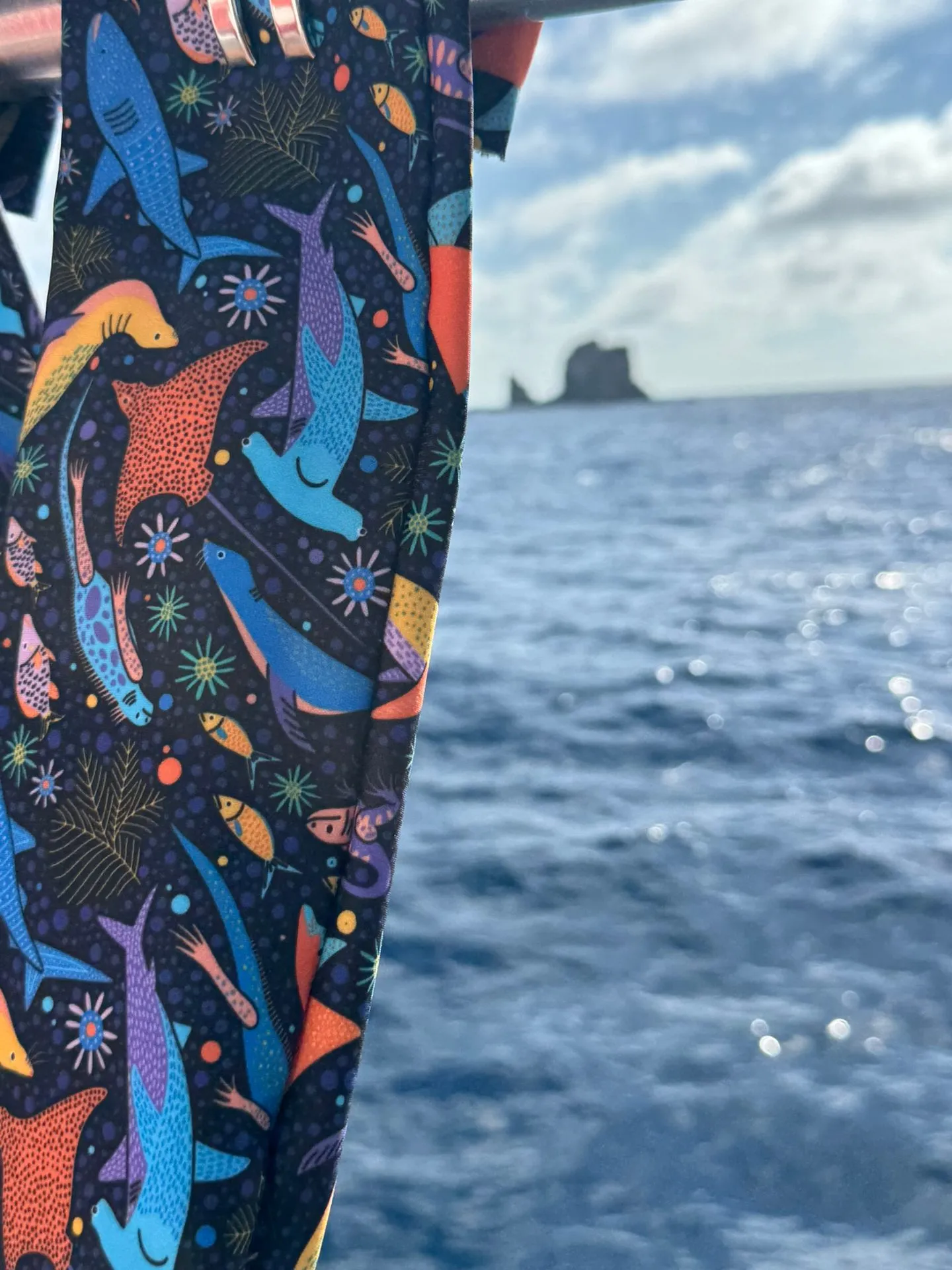
Emails into the void, minimum order maths, certificates with fine print. What we’ve learned trying to get our socks made properly.
Designing a dive sock is fun. You sketch hammerheads, you argue about shades of blue, you sew prototypes and test them on holiday. Then comes the part nobody puts on Instagram: finding someone to actually make the things. Properly. Fairly. In quantities a tiny brand can afford.
We’ve been deep in this for months now, and since we always said we’d build soggylife in the open, here’s what the hunt really looks like. No factory names, because conversations are ongoing. But everything else: unfiltered.
Where a print starts
Before any of the factory business, there is a moodboard. Ours always begins with a place we have actually dived, and two questions.
What does this region look like? Not the postcard version, the real one. The colours, the textures, the patterns, the mood of the water. Galápagos is cold and stark and volcanic. The Red Sea is warm sand meeting deep blue. Those things end up in the palette long before anyone draws a fish.
And who lives there? The creatures that make a place unmistakable, from the tiny critters you only find because a guide points at what looks like a piece of rubble, to the giants every diver quietly hopes for. A Galápagos print without hammerheads would be a nice pattern of nothing in particular.
That board is what we hand to our illustrator, and it is the reason the prints look like somewhere rather than like the ocean in general.
Emails into the void
We started close to home. First we researched Europe’s textile manufacturing hubs and built a long list of everyone who might plausibly make what we wanted. Then we worked out which fabrics we were actually after, which cut the list down considerably, because a workshop that does woven outerwear brilliantly is no help at all with sublimated stretch jersey. From the shortlist we started writing.
Small brand, small quantities, big dreams, you know the pitch. The response rate was humbling. Most never replied at all. We get it now: a pre-launch brand asking for a few hundred pieces is, from a factory’s point of view, a lot of setup work for very little order. But knowing that doesn’t make the silence feel better when it’s your inbox.
So we rewrote the emails based on what came back from the few who did answer, and slowly the conversations got further: replies, then questions, then actual calls. Somewhere in there the real lesson landed. What looks like a simple product, a tube of stretchy fabric with a nice print on it, is considerably more complicated to develop and manufacture than either of us assumed when we started.
So we widened the search, wrote better emails, and learned to lead with the things factories actually need to know. Which brings us to the tech pack.
The tech pack, or: learning to speak factory
A tech pack is the document that turns “colorful dive sock, about knee-high, you know?” into something a production team can build. Ours grew to fourteen pages. Measurement tables for every size with tolerances. Seam types (4-thread flatlock, since you ask). Fabric weight. Print specifications. Where the logo goes and how.
Building it was painful and absolutely worth it. The moment we started attaching a proper tech pack, replies got faster, more concrete, and more honest. Factories take you seriously when you’ve done your homework.
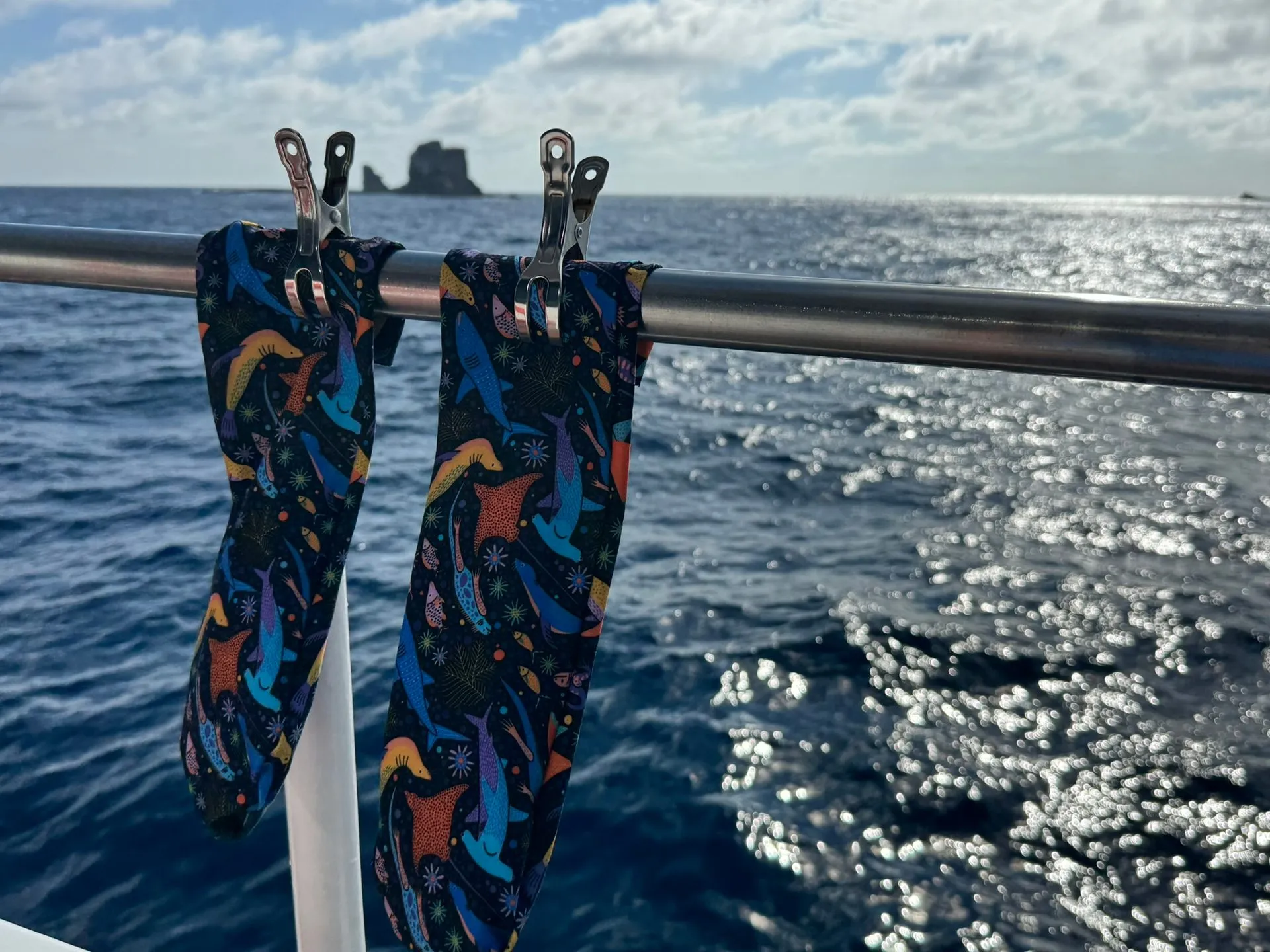
What the factories get to see: the hand-sewn generation their production version has to beat.
The minimum order trap
Here’s the lesson that hurt the most. A factory advertises a low minimum order, say a few dozen pieces per style. Wonderful, you think. Then you mention that your whole brand is built on all-over printed fabric, and the maths changes completely: the printer has its own minimum, so many meters of fabric per print design. Suddenly your “low minimum” is hundreds of pieces per design. Multiply by five prints and two products, and the friendly small order becomes a sum with more digits than our entire budget.
Nobody was lying to us. The sewing minimum and the printing minimum are just two different things, and you only discover the second one when you ask precisely. If you’re starting a printed apparel brand: ask about fabric minimums per print, in meters, in writing. It’s the number that actually decides what you can afford.
Ask every factory the same specific questions, in writing: minimums per style AND per print, prices at two or three quantities, sample costs, and which certificates apply to YOUR fabric. Vague answers to precise questions are an answer too.
Certificates: the fine print behind the labels
We want recycled fabric and safe dyes, so we ask for the standard certificates (GRS for recycled content, OEKO-TEX for harmful substances). Simple, right? Not quite. Things we’ve learned to check since:
The certificate usually belongs to the fabric mill, not the sewing factory. It can be expired. It can cover a different fiber than the one in your quote. And a factory-level certificate still isn’t proof that YOUR batch was made from certified material; that needs its own paperwork per shipment. We now read every PDF down to the validity date and the annex, like slightly obsessed detectives in flip flops.
And one more thing we hold ourselves to: “recycled” plastic collected near coastlines is ocean-bound, not “fished from the sea”. The difference matters, legally and honestly. If we ever print a claim on a hangtag, it will be one we can back with a number and a document.
The ethics question nobody can answer for you
This part matters most to us and is hardest to pin down. One factory might market its ethics beautifully: fair wages, meal programs, photos of smiling teams. Another says little publicly, but when you ask directly, gives you substantial answers about owning its factories, not subcontracting, healthcare, working hours, and an open invitation to visit.
What we’ve learned: how loudly a factory markets its ethics tells you how good its marketing is. The real signal is in the specific answers to specific questions, and ideally in standing on the factory floor yourself. That visit is on our list. We also drew some lines early about where we would and wouldn’t produce, and we’d rather pay more and sleep well.
Where we are now
Talking. Comparing. Rereading quotes at breakfast. The honest headline: making a small batch of printed socks fairly and transparently is possible, but every corner of it costs either money or patience, usually both. The trade-off in front of us is real: a smaller, affordable first run, or a bigger commitment with different assurances. We’ll pick the version that lets us look our customers (and the factory workers) in the eye.
When the first production socks exist, you’ll read it here first. Until then we’re in the unglamorous middle, and weirdly, we kind of love it.
Building something yourself and have manufacturer questions? Write us. We’ll share everything we know. Stay soggy.