


Booked your first week on a dive boat? Here’s the stuff the brochure skips: cabins, rhythms, dive family, and why less luggage wins.
You booked it. A whole week on a boat, four dives a day, reefs you’ve only seen on Instagram. And now, somewhere between excitement and packing panic, a quiet question creeps in: what is it actually like out there?
We’ve done this a few times now, on boats big and small, and there are things no brochure mentions. Not because they’re secrets. They’re just the kind of stuff you only learn by standing on a dive deck at 6 a.m., half asleep, wondering where your left fin went.
So here’s our honest briefing.
Your cabin is smaller than you think, and it doesn’t matter
The photos always show the biggest cabin on the boat. Yours will probably be a bunk, a tiny cupboard, and a porthole if you’re lucky. The first hour, that feels tight. By day two you only go down there to sleep anyway. Life happens on deck, in the salon, and in the water. Pack accordingly (more on that below).
The rhythm takes over
A liveaboard day sounds intense on paper. Eat, dive, eat, dive, nap, dive, eat, night dive, sleep. In reality it’s the most relaxing routine we know. There are no decisions to make. A bell rings, you dive. A bell rings, you eat. Your biggest daily problem is whether to nap before or after the third dive.
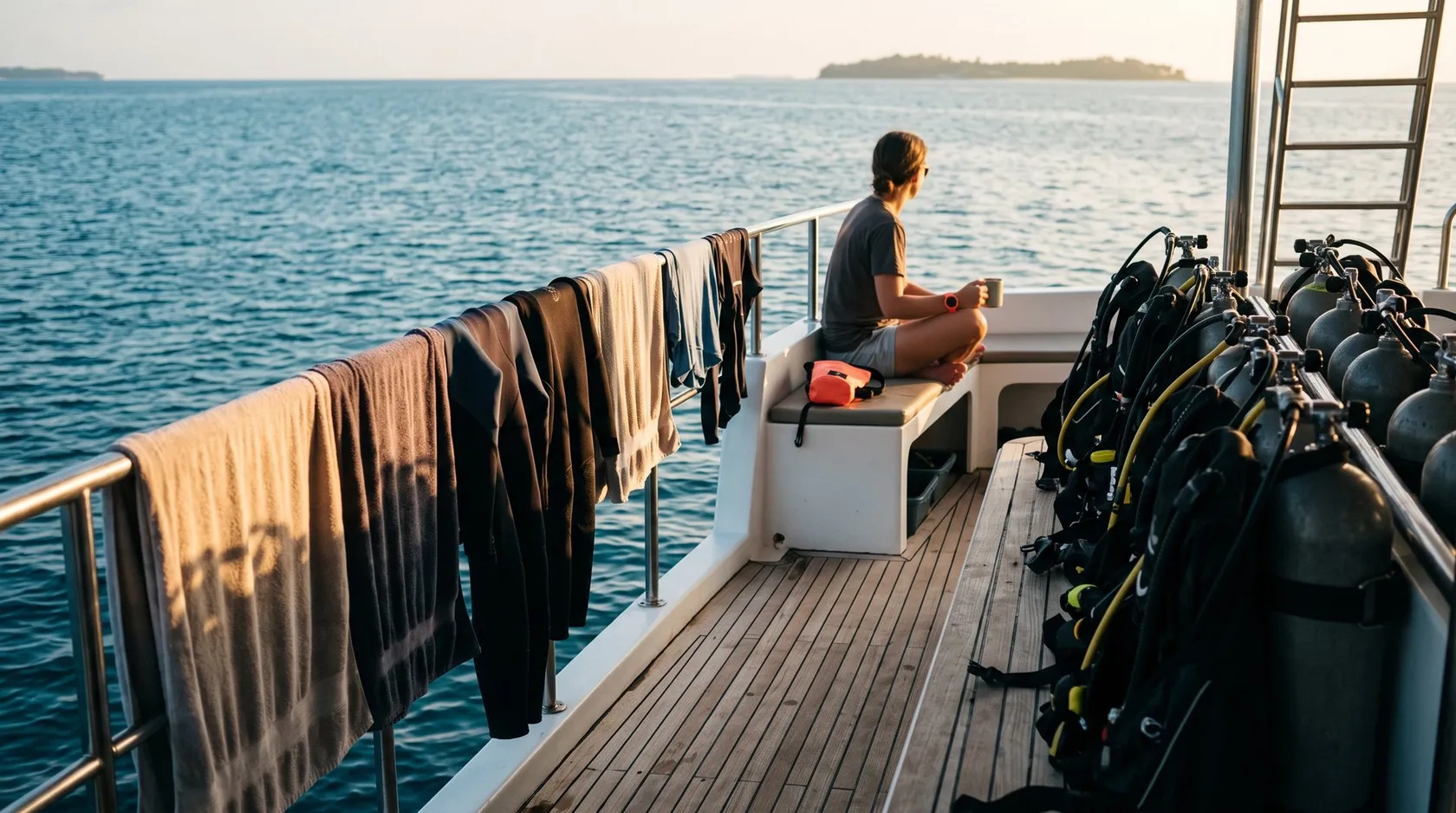
The flip side: it’s completely fine to skip a dive. Nobody hands out medals for doing all 18. Some of our best liveaboard memories are the dives we skipped, sitting on an empty deck with a mug of tea while everyone else was underwater.
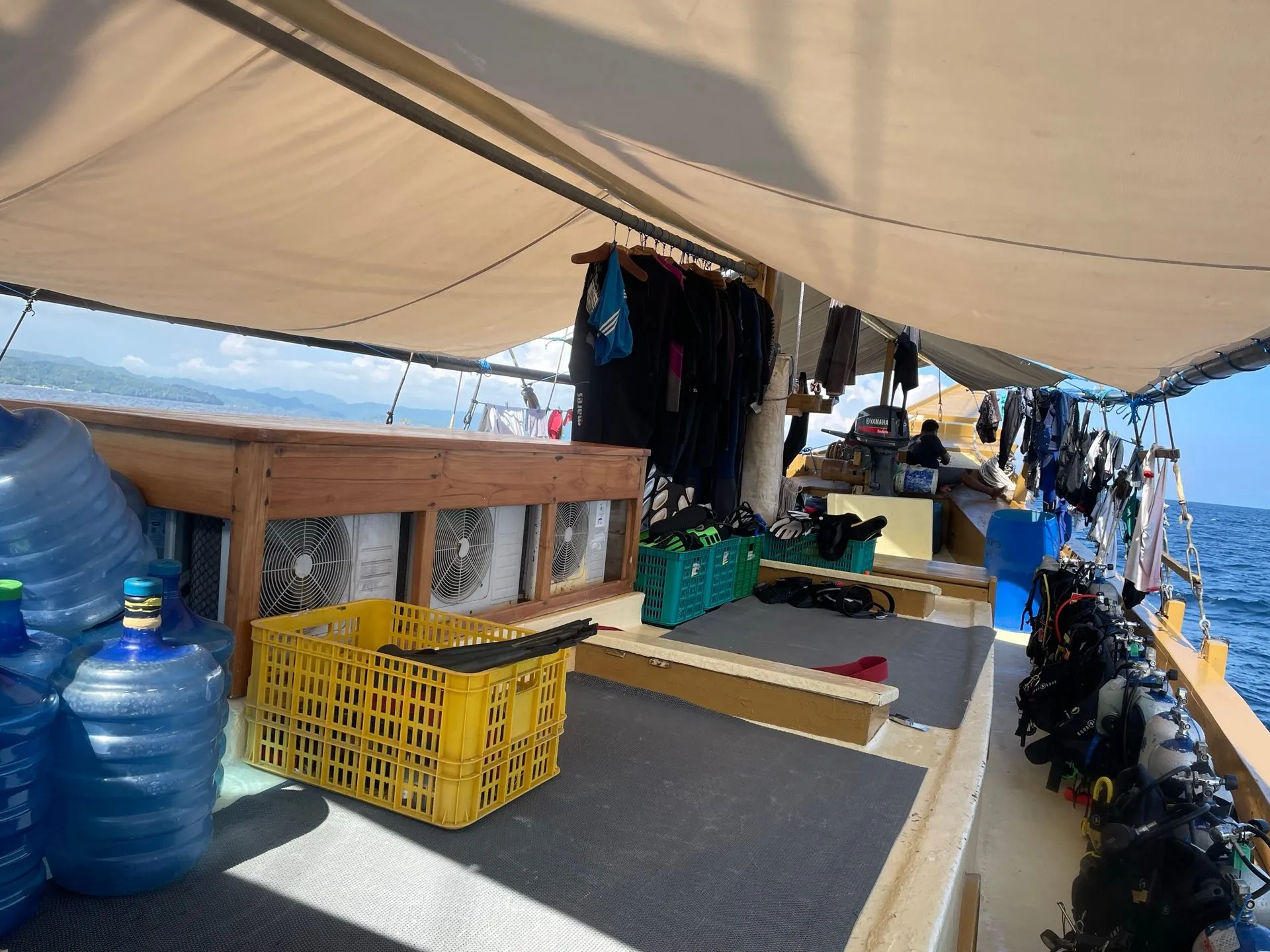
Your gear gets a numbered home. You’ll defend it like an apartment.
Strangers become dive family embarrassingly fast
You’ll share meals, briefings, and one very damp camera table with people you’ve never met. By day three you know their air consumption better than their last name. There’s something about being barefoot and salty together that skips about three months of normal friendship protocol.
And yes, there will be that one person who tells everyone about their 2,000 dives. Smile, nod, roll into the water.
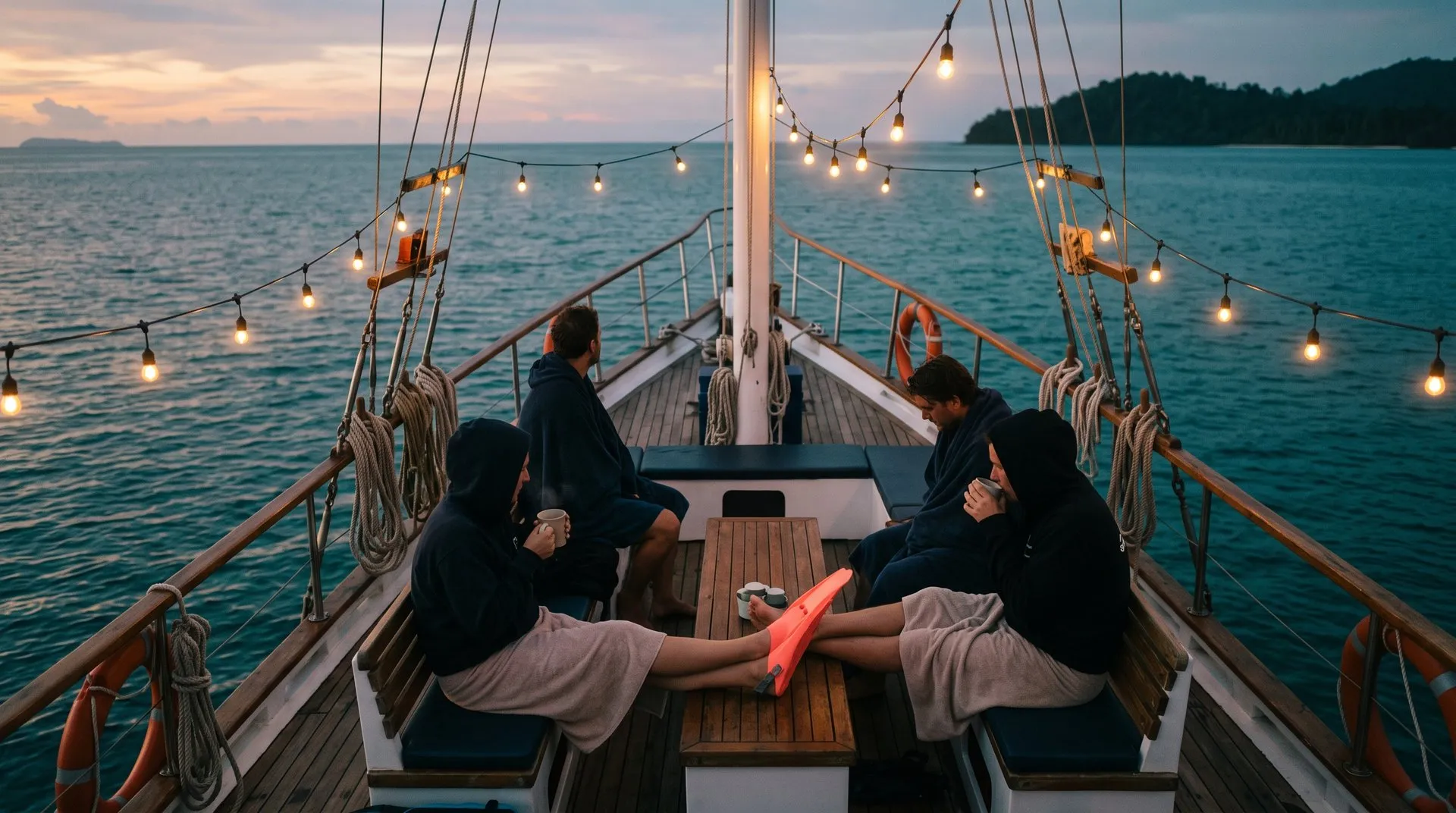
The hour nobody photographs for brochures, and the one you’ll miss most.
Less luggage, more happiness
We wrote a whole packing list about this, so here’s the short version: you will live in swimwear and the same two shirts. The fancy evening outfit stays in the bag all week. What you’ll actually reach for every day is a quick-dry towel, a hoodie for the wind, and dry clothes stashed in a dry bag so they’re within reach when the briefing happens on deck.
Wet gear stays on deck, always. Your cabin is the one dry place on the boat. Guard it.
Bring a small carabiner or two colored clips and mark your gear. Rental wetsuits and black fins all look identical at 6 a.m., and someone will walk off with yours by accident. Ask us how we know.
The things that actually go wrong
Nobody talks about this part, so we will. Ears get grumpy after ten dives. Feet get rubbed raw by fins. Someone always underestimates the sun on day one and glows like a buoy for the rest of the trip. And if you’re prone to seasickness, the first night of open-water crossing will find you (Caroline has opinions on this, and a separate article coming).
None of it ruins a trip. All of it is easier if you saw it coming. A small first-aid kit with ear spray, seasickness tablets, and blister plasters weighs nothing and has saved more of our trips than any piece of dive gear.
It ends too fast
The last morning is always the same. Gear rinsed and drying, logbooks out, everyone quietly planning the next trip they can’t afford yet. You step off the boat with salty hair, sixty new fish stories, and the firm conviction that normal life is overrated.
That’s the part nobody tells you: liveaboards are habit-forming. Don’t say we didn’t warn you.
Got your first one booked? Write us, we love hearing where people are headed. Stay soggy.