


The envelope at the end of the week makes almost everyone uncomfortable. Here's how we think about it, including the part most guides leave out.
Last evening on board. The gear is rinsed, the logbooks are filled in, somebody is passing round photos of the manta from day four. And in the middle of all that warmth, a small envelope appears, and you can watch the whole group do maths in their heads at the same time.
Nobody talks about this part, so let’s talk about it.
What you are actually tipping for
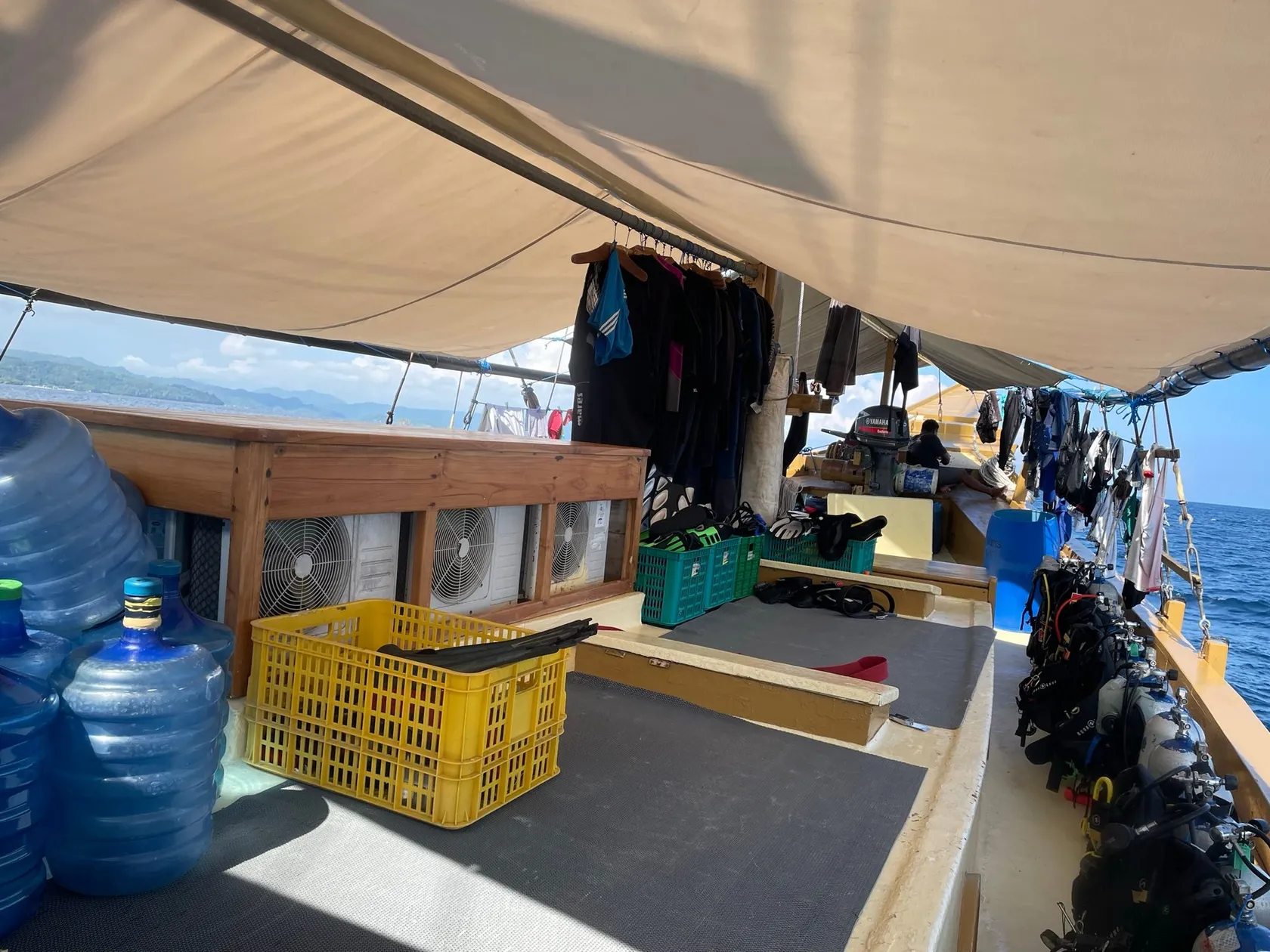
A liveaboard runs on people you mostly do not see. Somebody filled your tank while you were eating breakfast. Somebody cooked for twenty people in a galley the size of a bathroom, in a swell. Somebody moved your fins to the right station, checked the compressor at midnight, hosed the deck after every single dive, and was cheerful about it on day six when nobody else was.
The dive guides are the visible half. They found the pygmy seahorse you would have swum straight past, they knew which side of the pinnacle the current would let you rest on, and they counted heads at the surface every time before doing anything else.
It is genuinely hard work, most of it invisible, and a tip is the clearest way to say you noticed.
The ten percent problem
The recommended amount you see quoted most often is around ten percent of the trip price. On a liveaboard, that is real money.
And here is the thing that rarely gets said out loud: a liveaboard is often the single most expensive thing in a diver’s year. Add flights, park fees, nitrox, gear rental, the extra night in a hotel because the flight lands too late, and for a lot of people the budget was tight before the tip was ever mentioned. If you saved for three years to be on that boat, ten percent on top can be the difference between a great trip and a stressful one.
So: tip what you can genuinely afford. An amount given with a real thank-you, by name, to someone who made your week better, is worth more than a number handed over resentfully because a sign in the salon said so. And if the service was exceptional and your budget allows, being generous is one of the nicer things you can do with money.
Look up the boat’s tipping policy while you are still booking, and put the number in the trip budget from the start. It is a much smaller decision in January than it is on the last evening in July.
The part most guides leave out
Here is something we did not know for a long time: many liveaboards run two separate tip pools.
One goes to the dive team, the guides and instructors. The other goes to the boat crew, meaning the chefs, the engineer, the deckhands, housekeeping, everyone keeping the thing floating and fed. The split, and whether there is a split at all, varies from operator to operator.
Worth asking about early rather than on the last evening. Not because anyone is being sneaky, but because if you only knew about one envelope, half the people you wanted to thank never hear about it. Knowing the system also lets you plan the amount properly instead of splitting something in half at the last minute and hoping it works out.
The thing that costs nothing
Write the review.
If a crew was outstanding, say so publicly and say why. Name the guide who found the seahorse. Mention the chef who quietly made something separate for the person who could not eat gluten. That review does two jobs at once: it is recognition for people whose work is mostly invisible, and it is genuinely useful for the next person sitting at home trying to choose between six boats with near identical brochures.
We have booked trips off the back of one honest, specific review more than once.
Where we land on it
Kindness, respect and appreciation travel further than any percentage. Whether you are on a luxury boat or you scraped this trip together over years, a real thank-you counts. Say it out loud as well as in the envelope, because most crews hear a lot less of it than you would expect.
And if you are reading this while booking rather than while packing: put it in the budget now. Future you, standing on a dive deck on the last evening, will be glad it is already sorted.
Stay soggy.