


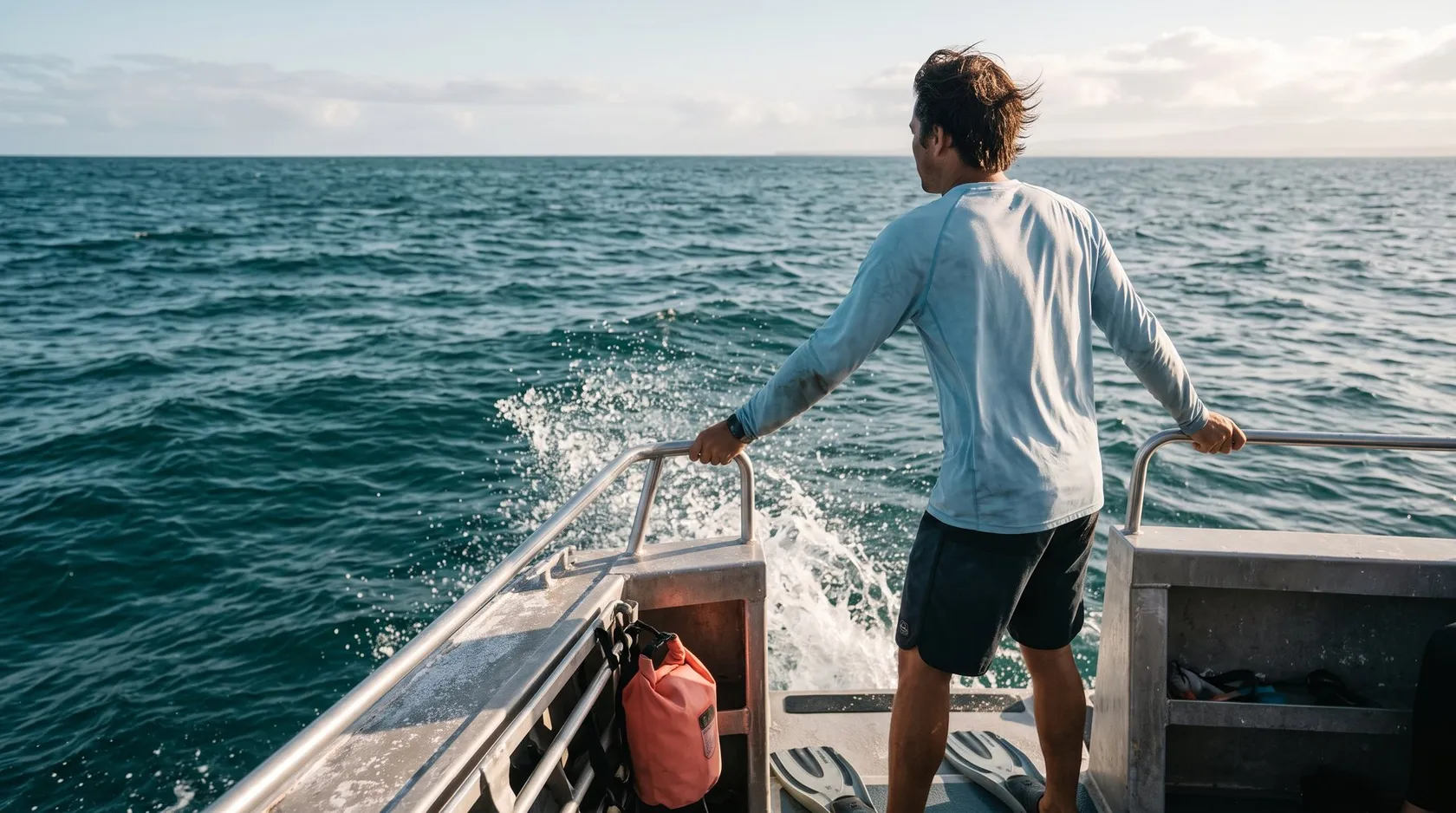
I get seasick like clockwork on the first day of every trip. Here’s what actually helps me, and what turned out to be expensive nonsense.
Let me introduce myself properly: I’m Caroline, and I get seasick. Not sometimes. Every single trip, day one, like clockwork. The boat leaves the harbor, the swell picks up, and my stomach files a formal complaint.
I still book liveaboards. I still love crossing open water at night. Because over the years I’ve figured out how to make peace with day one, and I want to save you the miserable trial-and-error phase I went through.
The mistake almost everyone makes
Waiting. You feel fine in the harbor, so you think maybe this time it’ll be different, and you save the tablet for later. Then the boat hits open water, the queasiness starts, and now it’s too late. Once you’re nauseous, the tablet mostly keeps you company while you feed the fish.
I learned this the hard way, more than once, because apparently I’m a slow learner when I’m optimistic. Now the rule is simple: I take my motion sickness tablet before we leave the harbor. Not when the swell starts. Before. Prevention beats hanging over the rail mid-briefing, as Jonas likes to remind me. Smugly. From his deck chair.
Which tablet works is personal, and some make you drowsy, so this is genuinely a conversation for your doctor or pharmacist before the trip. Ask specifically about non-drowsy options if you plan to dive the same day.
What actually helps me on board
The classics you’ve heard are classics because they work. Eyes on the horizon, not on your phone and definitely not on a book. Fresh air on deck instead of a stuffy cabin. Something plain in your stomach, because empty is just as bad as too full. Crackers are my friends. So is ginger tea, though I honestly can’t tell you if it’s the ginger or just the ritual of holding a warm mug.
Position matters more than people think. The middle of the boat moves least. On one crossing I spent two hours lying flat in the middle of the lower deck like a starfish, and it worked. Dignified? No. Effective? Very.
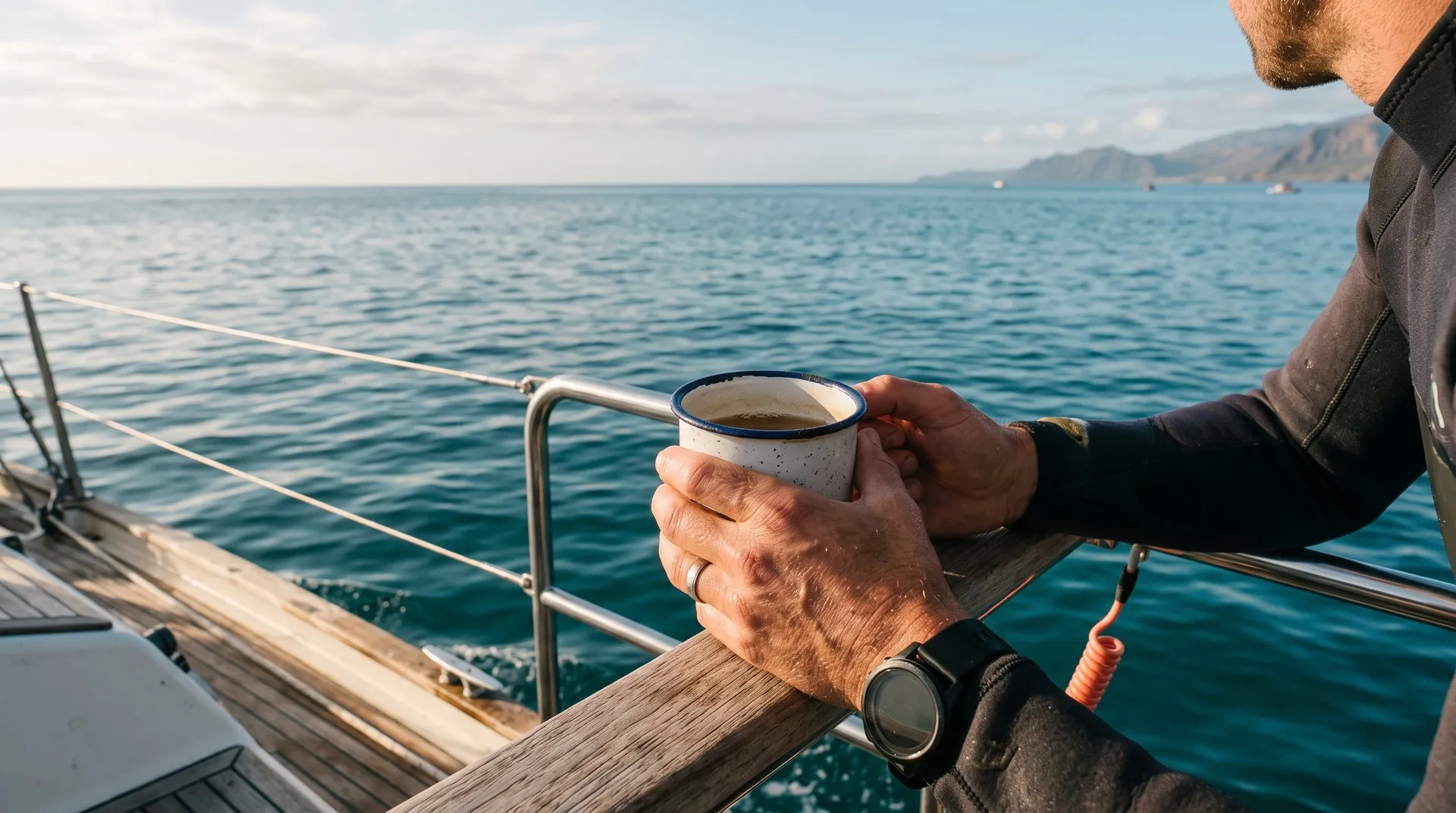
Horizon, fresh air, warm mug. My holy trinity.
And sleep. Seasickness feeds on tiredness. The trips where I arrive already exhausted are the trips where day one hits hardest.
If you can choose your cabin, take one low and midship. The rocking up front is fun exactly once, and it stops being fun at 2 a.m.
The expensive nonsense
I’ve bought the acupressure wristbands. Twice, actually, because the first pair got lost and I somehow thought the second pair might work better. For me they did nothing except leave little dents in my wrists. Some people swear by them, and the placebo effect is real, so I won’t judge. But if you’re on a budget: tablet first, bracelet later.
Same for the endless “seasickness hacks” the internet offers. Green apples, cola, standing on one leg (okay, I made that last one up, but barely). If it works for you, wonderful. Just don’t let a hack replace the boring, proven stuff.
The good news
It passes. For almost everyone, and definitely for me, the body adjusts after a day or two. By day three I’m eating dessert during a crossing and wondering what all the drama was about. Sailors call it getting your sea legs, and it arrives quietly, without an announcement.
So if day one is rough: this is not how the whole week will feel. Take the tablet, find the horizon, claim your spot midship, and be a little patient with yourself.
One more thing, and it took me a few trips to trust it: I still dive when I feel seasick. The moment I am under the surface it is simply gone, every time. The rocking stops existing, my stomach forgets what it was complaining about, and the dive is as good as any other. Getting geared up while queasy is genuinely unpleasant, I will not pretend otherwise. But I have never once regretted going in.
And once it settles, the ocean gives back everything it took. That first dive after the queasiness lifts, when you drop below the surface and everything goes calm and blue? That’s the moment I book these trips for.
See you out there. Preferably midship.