

How to Stop Your Dive Mask from Fogging (For Real This Time)

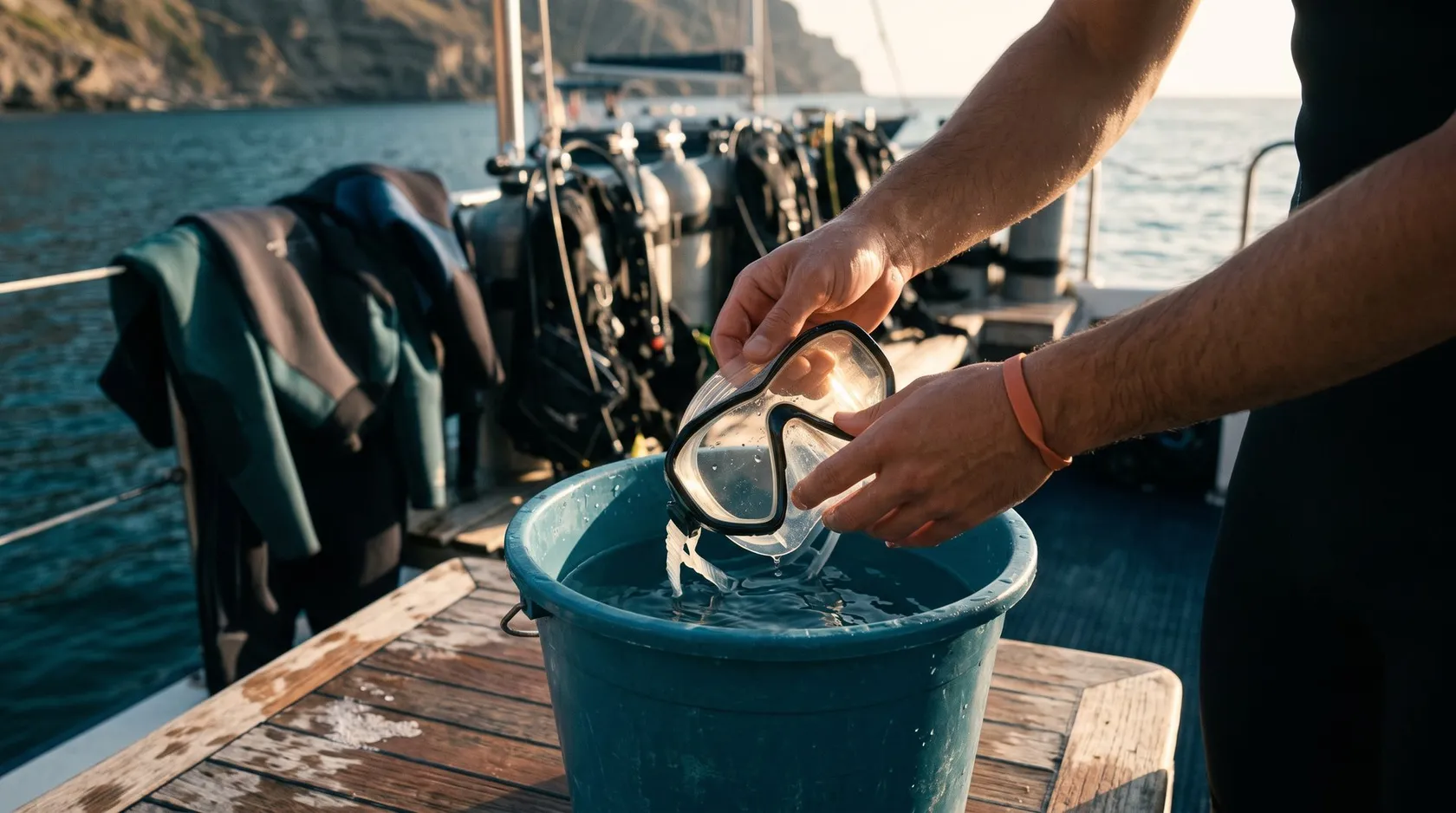
New mask fogging up every dive? It’s almost never the mask. The factory film, the spit myth, and the routine that keeps our glass clear.
There’s a manta somewhere out there in the blue. Your buddy is pointing, excited. And you? You’re looking at the inside of your own mask, which has turned into a bathroom window. You clear it, it fogs again. Clear, fog, clear, fog, all dive long.
Fog has probably ruined more dives than bad weather. The annoying part: it’s almost completely preventable. The even more annoying part: most of the standard advice skips the one step that matters most.
Why masks fog at all
Warm, humid air (from your face and your breath through the nose) meets cooler glass, and the moisture condenses into thousands of micro-droplets. That’s the fog. Defog products work by making the glass so slick that droplets can’t settle into that milky film.
So far, so simple. But here’s the thing that trips up almost everyone with a new mask.
The factory film, or: why your brand-new mask fogs worst of all
New mask glass comes with an invisible film of silicone residue from manufacturing. Moisture loves this film. As long as it’s on the glass, no amount of defog will save you. You can spit on it, spray on it, pray on it. It fogs.
That film needs to come off once, properly, before the mask’s first trip. The gentlest reliable method we know: a soft toothpaste (plain white paste, no gel, no whitening granules), rubbed onto the dry inner glass with a fingertip, small circles, a few minutes per lens, then rinsed. Some people repeat it two or three times. There are more aggressive methods involving lighters floating around the internet, and honestly, we keep our hands off open flames near tempered glass and silicone skirts. The toothpaste route is slower and burns nothing down.
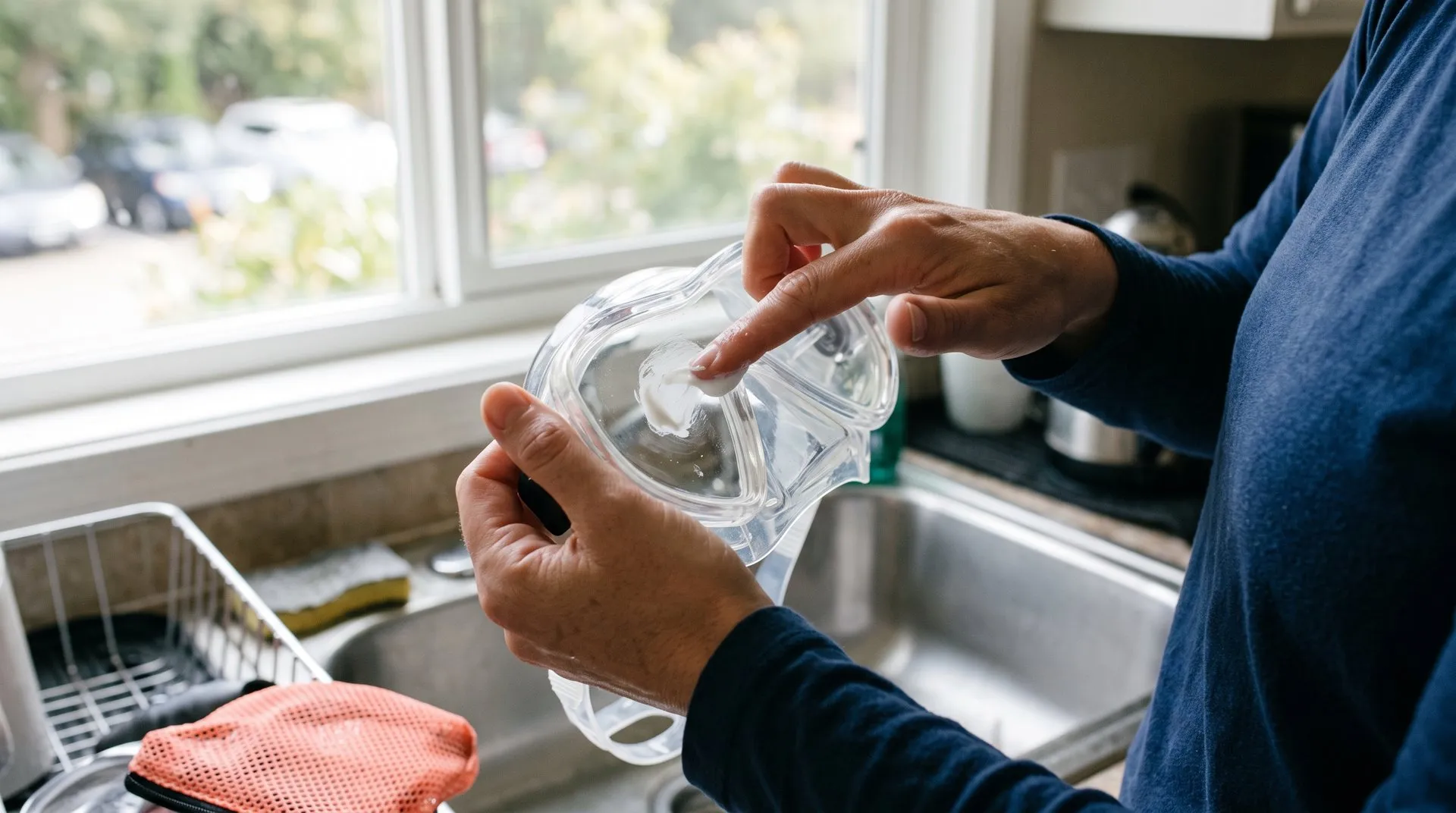
The least glamorous step in diving. Also one of the most effective.
Do this once and your mask starts its life actually capable of staying clear.
The routine that keeps it clear
What we do before every single dive, in order: defog onto dry glass, spread it, one short rinse, mask straight onto the face. That’s it. The details matter though.
Dry glass first, because defog sticks best to a dry surface. For spreading it we use a glasses cleaning cloth, the small kind that comes with every pair of sunglasses. It moves the defog into an even film without leaving lint behind, which a towel corner or a shirt hem absolutely will. One rinse, not five, because every extra rinse washes more of the defog away. And once the mask is prepped, it goes on your face or stays untouched. Every “let me just check something” swipe with a finger removes the layer you just applied.
Does spit work? Sort of, sometimes, if the mask is well prepped and the water is warm. It’s the emergency option, not the plan. A small bottle of defog costs little and lasts a season.
Keep a small microfiber cloth in your dive crate, damp with defog solution. One swipe across the glass before every dive and it’s crystal clear. Game changer.
Still fogging? Run through this list
A prepped, defogged mask that still fogs usually has one of these problems. Sunscreen or skin oils on the glass, wiped there by an innocent finger. Hair under the skirt letting warm air stream in. Breathing out through your nose the whole dive, which pumps humid air onto the glass nonstop (common when you’re stressed or new, it fades with relaxed diving). Or the factory film was never fully removed, in which case: toothpaste, round two.
And sometimes the mask genuinely doesn’t fit, lets water creep in, and what looks like fog is condensation from constant clearing. That’s not a defog problem, that’s a fit problem, and no paste in the world fixes it.
Clear glass changes everything. You stop fiddling and start actually looking, which is the entire point of going down there.
Now go find that manta. Stay soggy.