

Happy Ears on a Dive Trip: Equalizing, Rinsing, and Knowing When to Stop

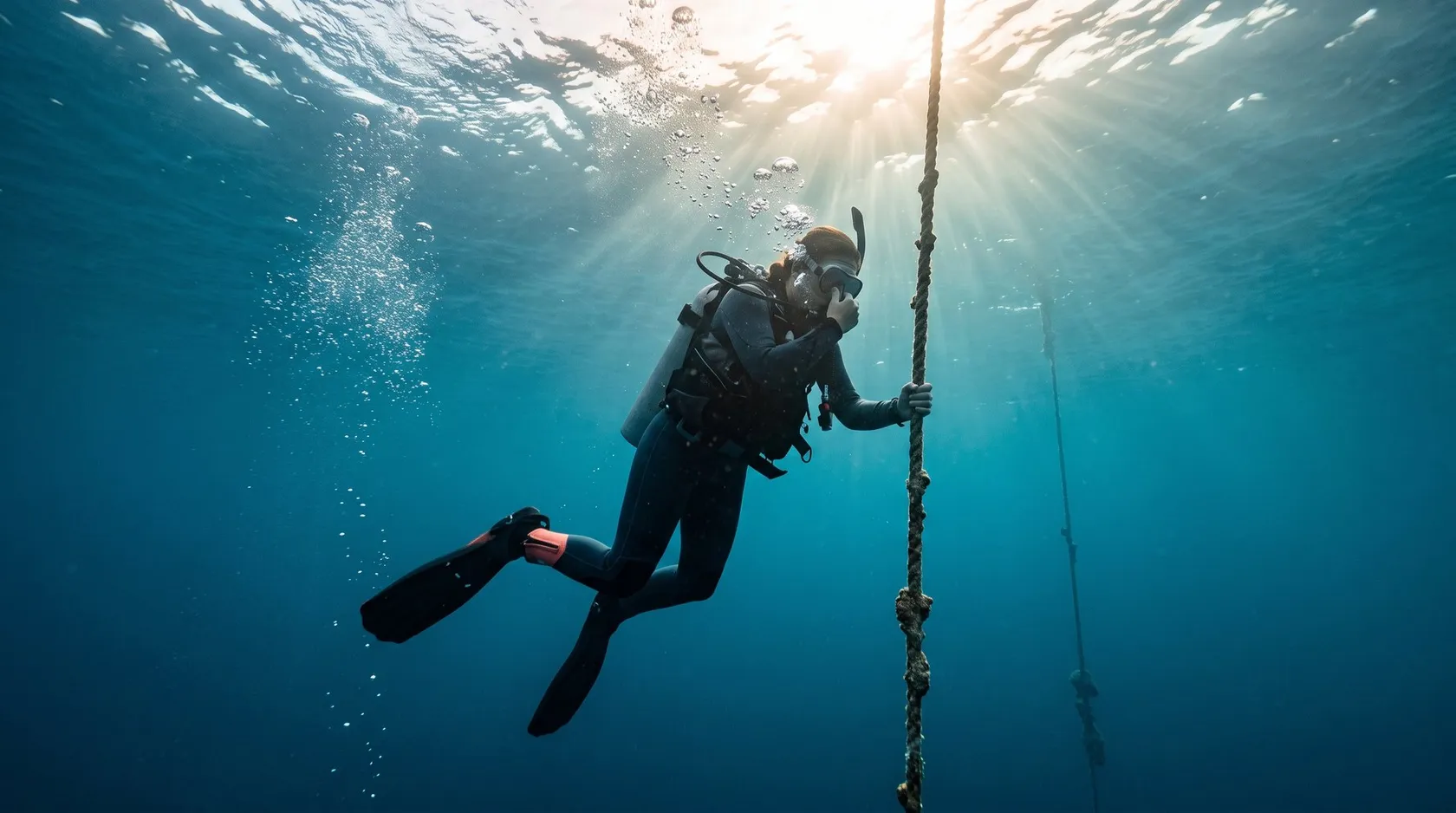
Ten dives in three days is a lot to ask of two small ears. How we keep ours happy on long trips, and the one rule we never break.
Your ears are the smallest pieces of equipment you bring on a dive trip, and the only ones you can’t rinse out and replace. Ten dives in three days is a lot to ask of them. Ask too roughly, and they’ll end your trip faster than a broken fin strap ever could.
We’ve learned to treat ours like the divas they are. Here’s our routine, plus the one rule we never break.
Equalize early, often, and gently
The classic beginner mistake is waiting until the ears hurt and then forcing it. By the time it hurts, the pressure difference is already squeezing the tissues, and a forceful blow against pinched nostrils can do more harm than good.
What works instead is boring and undramatic. Start equalizing at the surface, before you even feel anything. Then keep doing it every meter or so on the way down, gently, before any discomfort shows up. Descending feet first along a line helps a lot, because you control the pace and can stop dead the moment an ear complains.
And if an ear won’t clear? Go up a meter, wait, try again softly. The reef will still be there thirty seconds later.
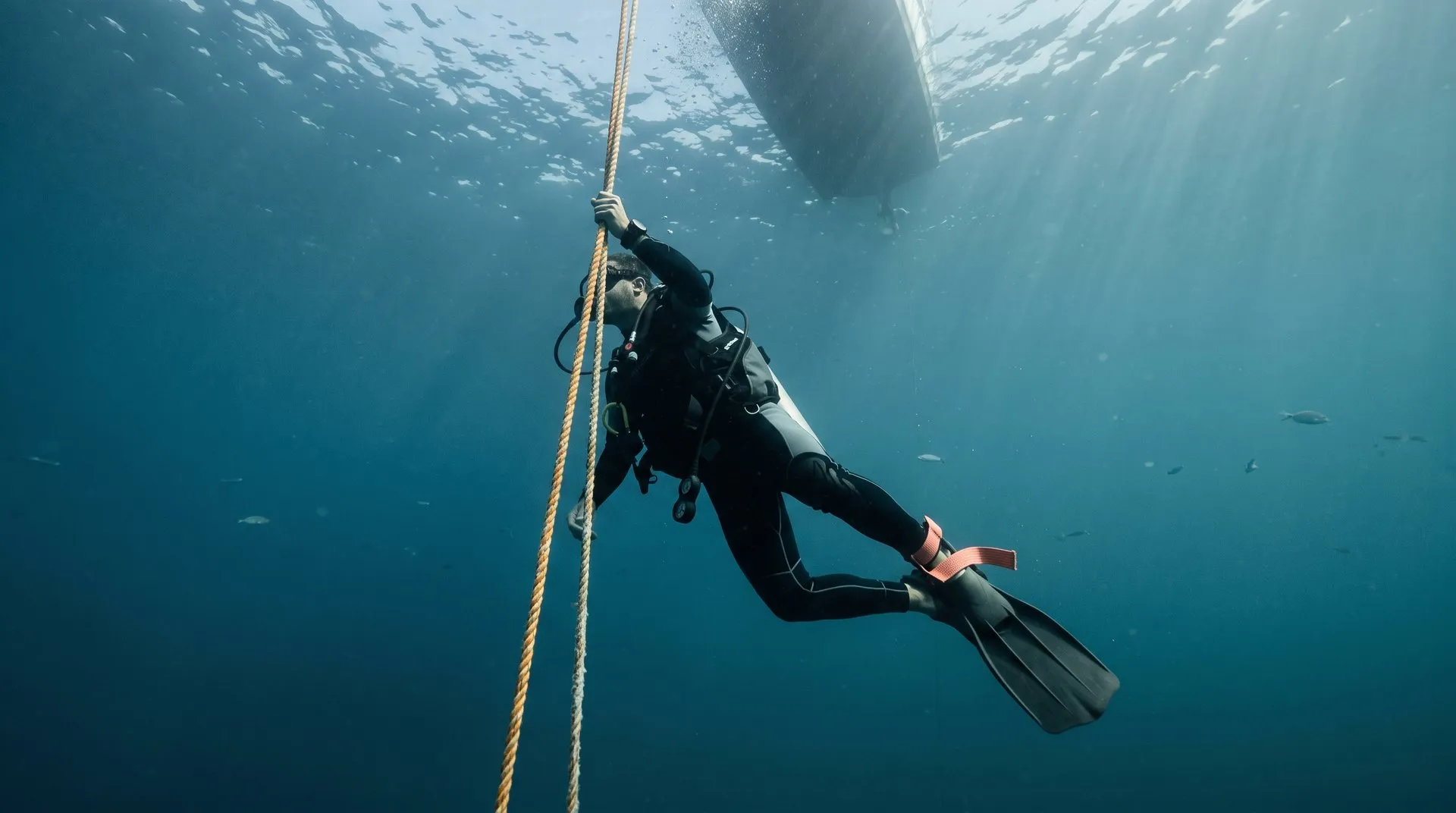
Unhurried is the whole technique.
The one rule we never break
If it hurts, the dive is over. Or it doesn’t start at all.
That includes diving with a cold. We know the temptation. You flew eleven hours for this, the visibility is perfect, and your head is stuffy but “probably fine”. It’s not fine. Congested airways block the tubes your ears equalize through, and forcing it is how people turn a holiday cold into a damaged eardrum and a very long, very quiet flight home.
One of the hardest things in diving is sitting on the boat while your group descends without you. It’s also, occasionally, the smartest thing you’ll do all trip.
After the dive: rinse and dry
Long trip days leave warm, wet ear canals, and warm wet places are exactly where infections like to move in. Swimmer’s ear on day four is a classic liveaboard souvenir, and it’s mostly preventable.
Our routine is simple. Fresh water rinse after the last dive of the day, then let the ears drain properly (tilt your head, tug the earlobe, wait for the warm trickle, you know the one). We also pack an ear spray made for exactly this, keeping the canals clean and dry after long days in the water. It lives in our little liveaboard pharmacy next to the seasickness tablets.
One thing about the spray, learned the slightly uncomfortable way: once a day is enough, and we use it in the evening before bed. More often than that and you dry the canal out, which brings its own kind of misery. It is there to help your ears finish drying, not to replace what your body does on its own.
One thing we don’t do: cotton swabs. They push things in deeper and scratch skin that’s already soft from soaking all day. Your ears clean themselves. Let them.
The thing we pack and hope never to open
Before a long-haul or remote trip, we ask our ENT specialist for antibiotic ear drops to take along, in case a real ear infection turns up. They need a prescription, so this has to happen before you fly, not from a beach in the middle of nowhere. We have never had to use them. But somewhere on the other side of the world, three days from the nearest pharmacy, knowing they are in the bag changes how you sleep.
The conversation with your doctor matters as much as the prescription. Ask what an actual infection feels like as opposed to a bit of water sloshing around, and ask when the drops should be used and when they should not. Neither of us wanted to be the person guessing at that on day six of a liveaboard.
Have that conversation before the trip, not during it. Ten minutes in a waiting room at home beats an hour of worrying at sea.
Know the difference between grumpy and injured
After a heavy dive day, slightly full-feeling ears can be normal. Everything settling overnight is a good sign. Sharp pain, hearing loss, dizziness, or anything leaking is not “grumpy”, that’s a doctor visit, and on a boat that means telling the crew immediately. Dive crews deal with ear trouble constantly and would much rather hear about yours early.
We’re divers, not doctors, so take this for what it is: the routine of two people who want their ears to last another forty years of diving. For anything beyond routine, the real answer is a professional who can actually look inside.
Be patient on the line, skip the heroics, and your ears will keep unlocking the quietest place you’ll ever visit.
Stay soggy. Both ears open.