

Blisters from Fins: Why Your Feet Suffer and How to Stop It

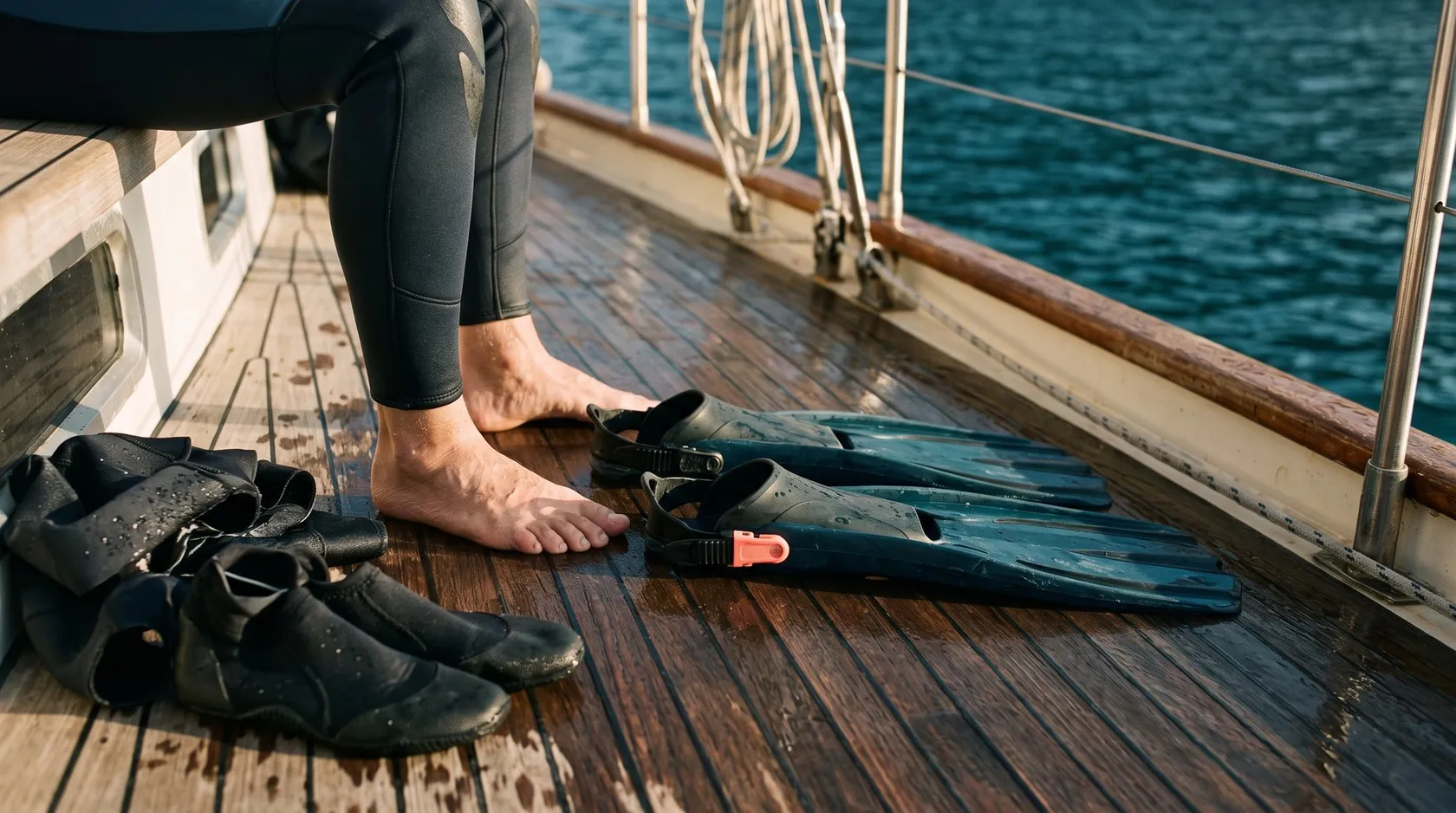
Raw heels after two dives? It’s not your feet, it’s the friction. What causes fin blisters and what we do about them.
Two dives into the trip and there it is. That hot, tender spot on your heel that you try to ignore during the briefing, poke at during lunch, and by the night dive it’s a proper blister. Every fin stroke reminds you it exists. For the rest of the week you’re doing math before every dive: how much do I want to see this reef, exactly?
We know this feeling a little too well. Our whole company exists because of it, but we’ll get to that.
Why fins eat feet
Blisters are friction plus moisture plus time, and diving delivers all three in generous portions. Your skin is soft from hours in the water. The fin pocket is rigid. Every kick slides the two against each other a few millimeters, a thousand kicks per dive, four dives a day. Do the math and it’s a small miracle anyone has intact heels at all.
A few things make it worse. Fins that are slightly too big, because your foot moves inside the pocket. Fins that are slightly too small, because pressure points form where the pocket squeezes. Sand or salt crystals inside the pocket, which turn the whole thing into gentle sandpaper. And rental fins, which have been shaped by two hundred strangers’ feet before yours and fit precisely none of them.
Notice how “perfectly fitting fins” is a narrow target? That’s the core problem. Bare skin in a hard pocket only works if everything is exactly right, and on a real trip it rarely is.
What doesn’t work (we tried)
Plasters fall off. Tape works for about half a dive, then peels at the edges and you spend your safety stop harvesting bits of it from your fin pocket. Wearing thick neoprene booties with full-foot fins ruins the fit and gives you cramps as a bonus. And the classic “just toughen up, the skin will harden” advice? The skin doesn’t harden. The trip just ends.
What actually works
Put a layer between your skin and the fin. That’s the whole trick. The layer takes the friction so your skin doesn’t have to.
For open-heel fins with booties, thin neoprene socks under the booties smooth things out. For full-foot fins, the kind most of us wear in warm water, thin lycra dive socks do the job. They weigh nothing, dry fast, and suddenly the fin pocket glides instead of grinding. Bonus: getting into a wet wetsuit with socks on is weirdly, almost suspiciously easy.
We discovered this on a liveaboard where every wetsuit change felt like a wrestling match and our feet were rubbed raw. Two American divers on our boat slipped in and out of everything like it was nothing, wearing brightly colored lycra socks. We stared. We asked. We copied. And eventually we started making our own, with prints that make you smile at 6 a.m. before dive one.
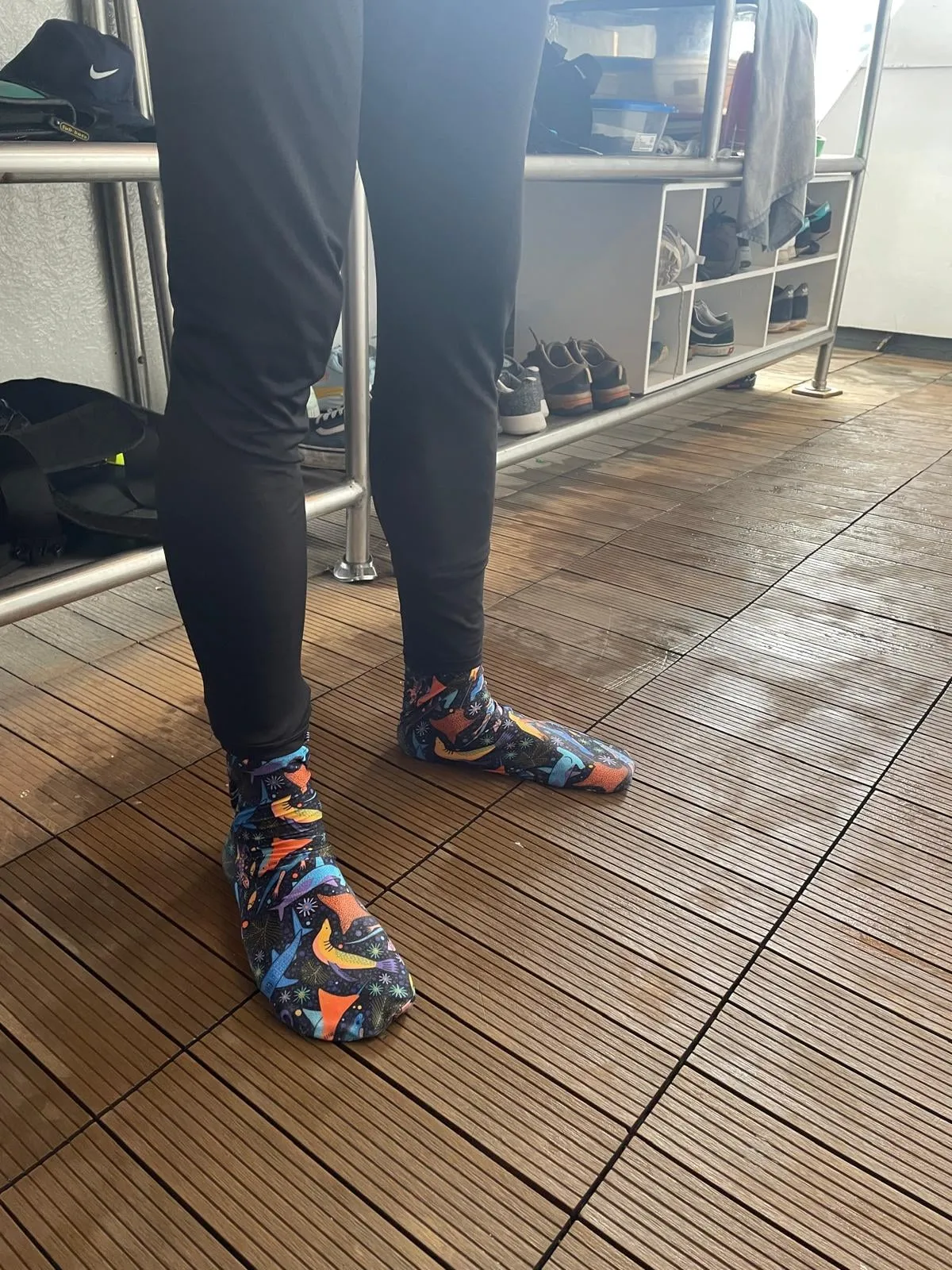
Socks on first, wetsuit over the top. That order matters, and it is the one people get wrong.
Worth saying clearly, because we get asked: the socks go on your bare feet, then the wetsuit leg comes down over them. Not the other way round. Pulled on over the suit they look fun and do nothing, because the friction you are trying to stop happens between your skin and the neoprene.
Rinse your fin pockets with fresh water at the end of each dive day. Salt crystals dry inside overnight and greet your feet in the morning like tiny shards of glass.
If the blister is already there
Realistic advice for mid-trip damage: keep it clean, cover it with a hydrocolloid blister plaster (the gel kind, they stay on better in water than regular plasters), and put a sock over it so the plaster stays where you put it. If it’s open and angry, give it a dive off. One skipped dive now beats limping through the rest of the week.
And when you get home, figure out the root cause. Was it fit? Sand? Bare skin in a rental fin? Blisters are a message. Worth reading before the next trip, not during.
What’s your worst fin-blister story? We collect them, mostly to feel better about our own. Stay soggy.